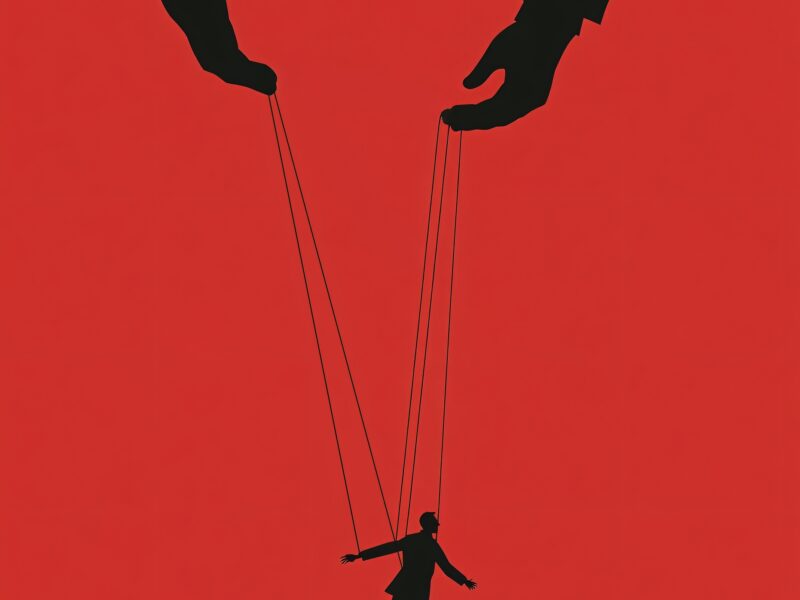
The most powerful man in Russian politics was also quietly running a secret crypto network from inside Skolkovo
THE NAME AT THE TOP
Part 5 of this series documented MaxiCo, the operator inside Skolkovo who administered a secret cryptocurrency network worth hundreds of millions of dollars, reported to the SVR every Monday, and received instructions through a closed corporate messenger. What Part 5 established, but did not fully explore, is who was on the other end of that messenger. The contact whose IP address resolves to Staraya Square, 4 (the Main Directorate of Special Programs of the President of the Russian Federation) has been identified. His name is Vladislav Surkov, born 21 September 1964. If you have followed Russian politics at any point in the last twenty-five years, you already know that name.
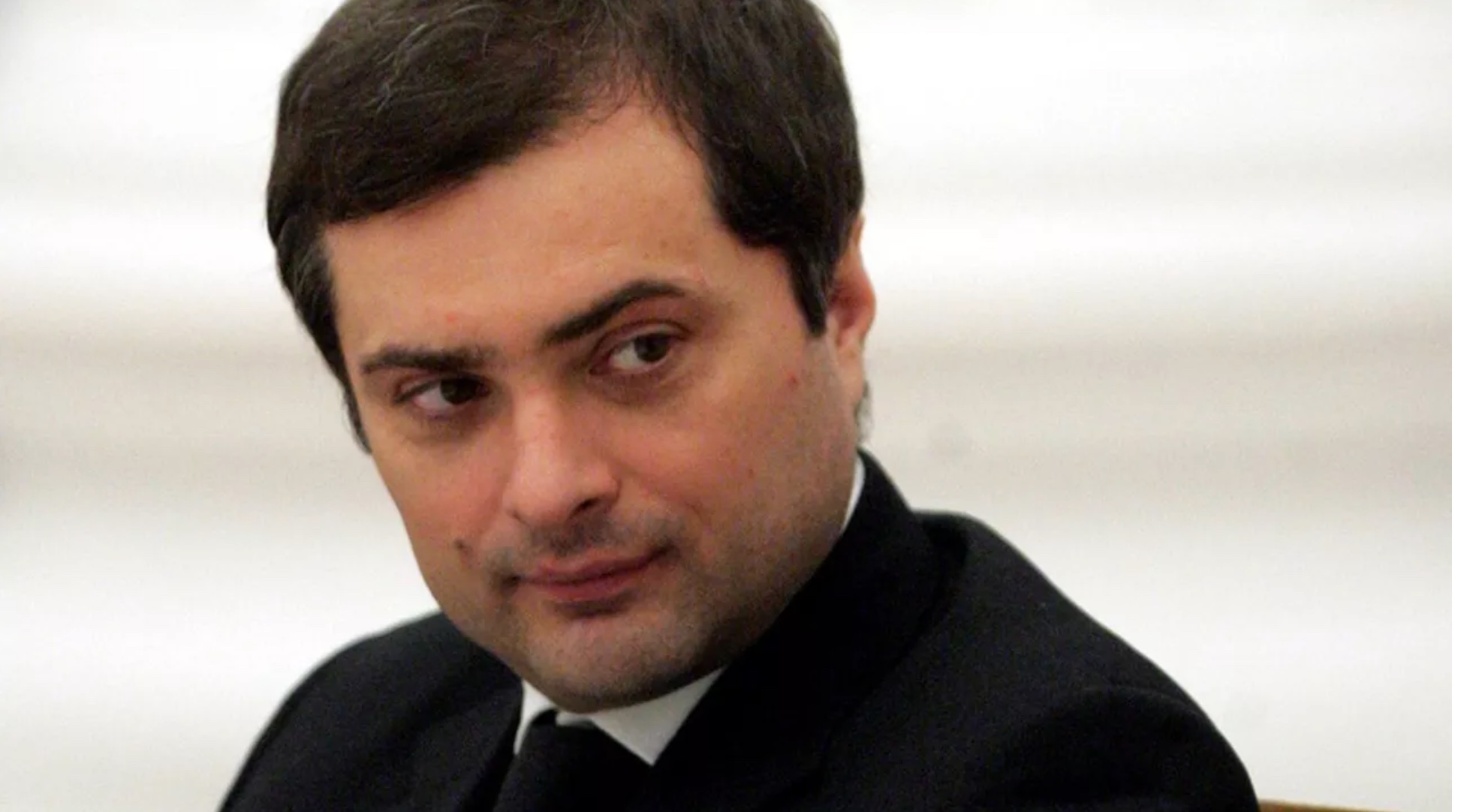
Vladislav Surkov. For over a decade, the most powerful unelected man in Russia. The architect of “sovereign democracy.” The man whose IP address sits at the top of MaxiCo’s command chain.
WHO SURKOV IS
For most of the Putin era, Vladislav Surkov was the most powerful unelected man in Russia. From 1999 to 2011, he served as First Deputy Chief of the Presidential Administration. He built United Russia. He managed state media. He controlled who rose and who fell in Russian politics for over a decade. Reuters called him the Kremlin’s “shadowy chief political strategist.” One Russian oligarch called him the “main puppet master of the political process.” The BBC credited him with keeping Putin in power since 2000. In Russia, the term for what he did is политтехнолог, political technologist. No one was better at it.
The same man who managed Russia’s elections, controlled its media, and kept Putin in power for a decade was also the person who built Skolkovo, using Western money, Western partners, and Western credibility. And then used it to run a covert network that moved hundreds of millions of dollars for a government under Western sanctions. The West didn’t just miss it. The West funded it.
By 2011, his style was no longer what Putin wanted. Surkov was pushed sideways into the Deputy Prime Minister role, then resigned in 2013 amid disputes over the Skolkovo corruption case. a detail that, in retrospect, reads very differently now. In February 2020, Putin fired him. He has not held a formal public role since.
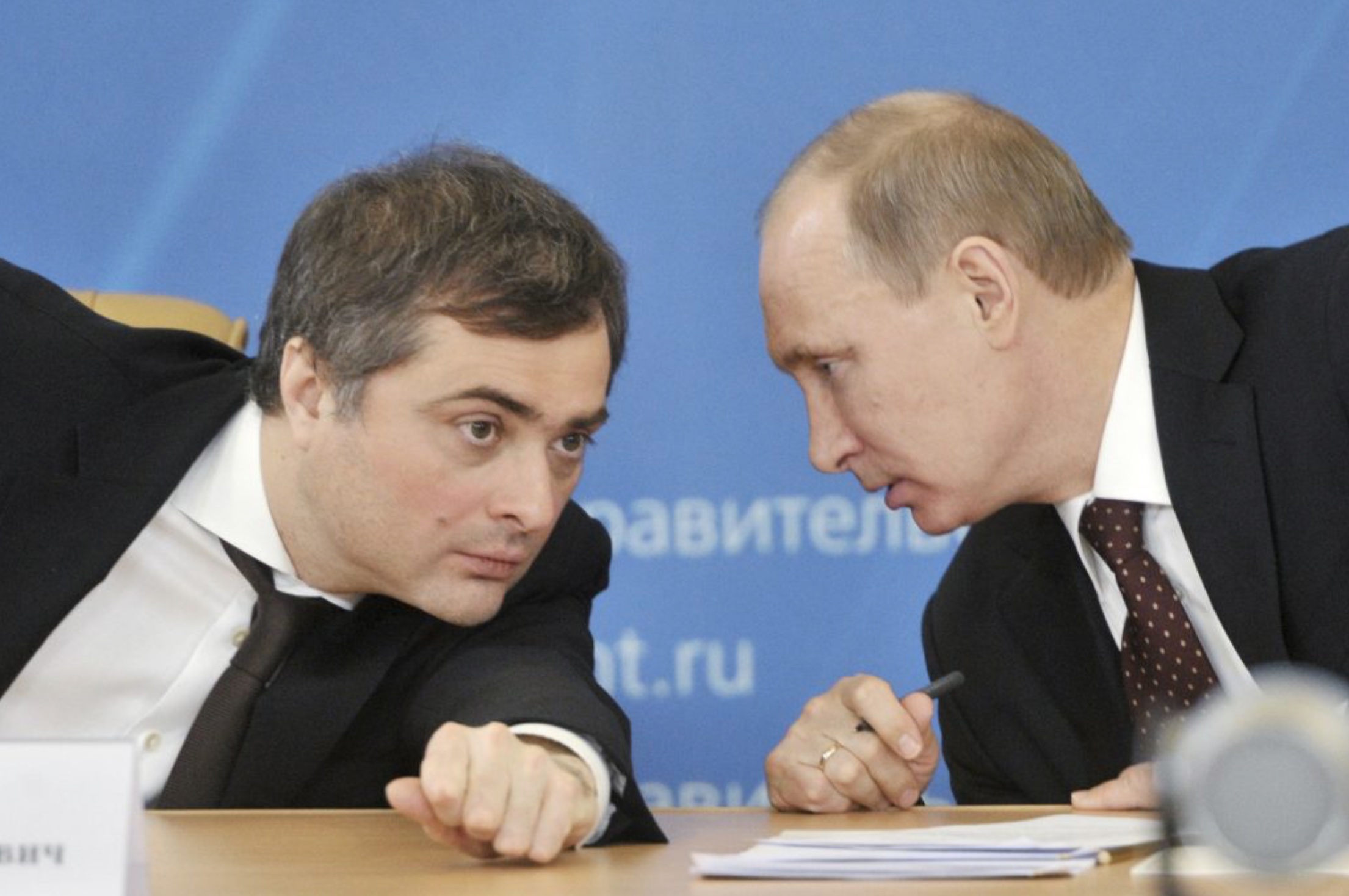
Vladislav Surkov and Vladimir Putin in conversation. For over a decade, Surkov was the man who engineered Russia’s political system from the inside — the architect who kept Putin in power.
“He built Russia’s political system. He managed its elections. He shaped its media. And somewhere along the way, he also built something else — a cryptocurrency network running out of the institution he helped create.”
THE SKOLKOVO CONNECTION
The connection between Surkov and Skolkovo is not circumstantial. He was put in charge of the working group that created the Skolkovo Innovation Center, established on 31 December 2009, by presidential order. The center was his project from the beginning: the legal framework, the governance structure, the relationships with Western partners. He built the institution that later became the hub of a covert financial network moving hundreds of millions of dollars for the Russian state.
The technical evidence places Surkov in direct contact with MaxiCo through a closed corporate messenger. Surkov’s messenger account is registered under his real name. His IP addresses resolve to two separate access points inside Staraya Square, 4: one on the 3rd floor via Wi-Fi, one on the 2nd floor via a wired connection. The distance between the two access points is less than 50 meters. The building is the Main Directorate of Special Programs of the President of the Russian Federation.
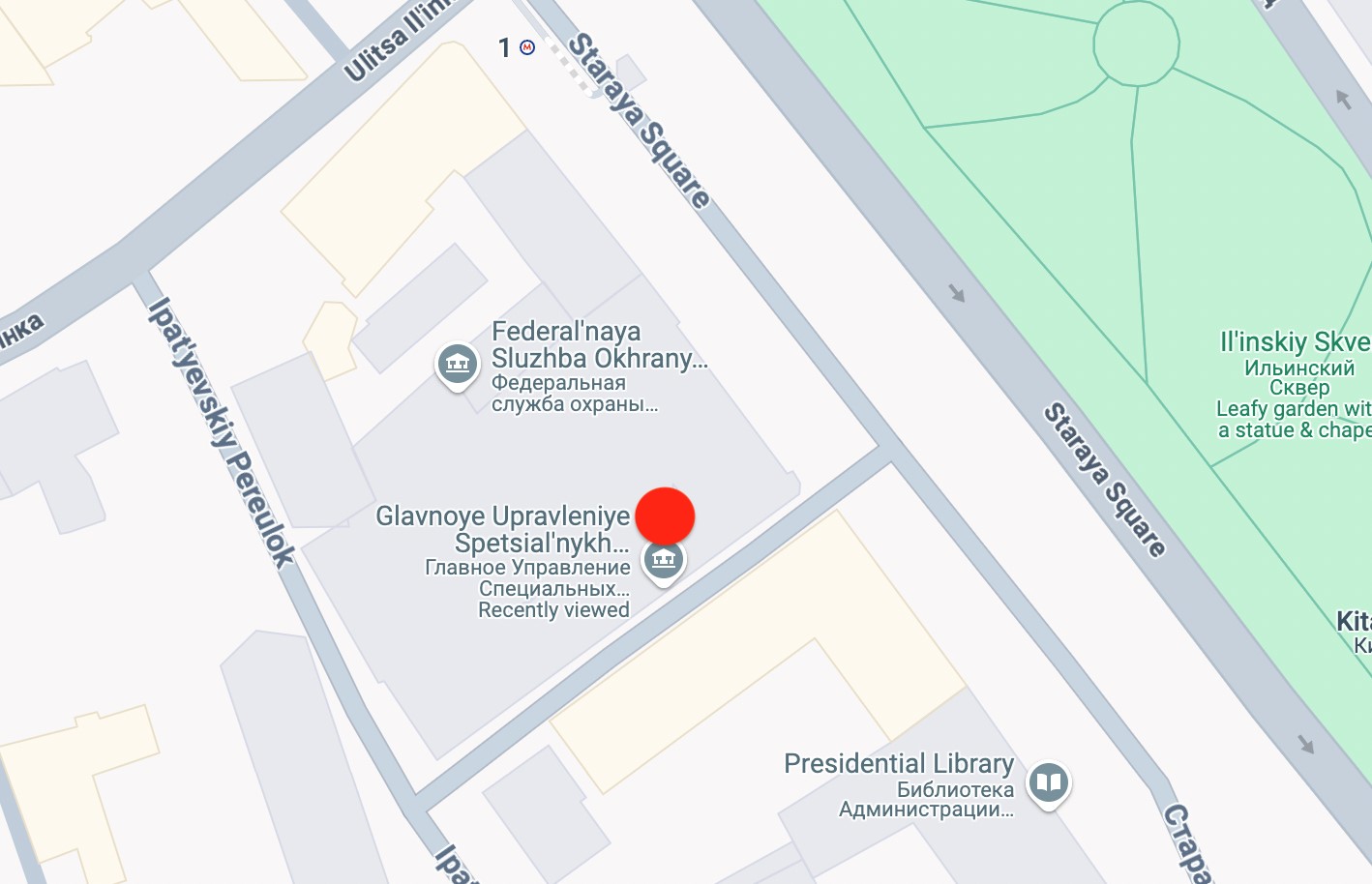
Staraya Square, 4, Moscow — the Main Directorate of Special Programs of the President of the Russian Federation. The IP addresses from which Surkov communicated with MaxiCo are registered to this building. Source: Google Maps.
THE SCALE OF THE OPERATION
What was Surkov overseeing? Based on the transaction data documented in this series, the network he oversaw moved:
→ Approximately $2 million via 124 separate Binance transactions from a single Moscow account
→ A $512,012 ZCash transfer, planned, executed, and cleared in 48 hours
→ A $362,975 Monero cycle, sent from a criminal group, passed through the foundation, returned to the same group
→ A cash conversion operation in Klaipeda, Lithuania: €100,000, five times per week
→ A reserve fund of 683 Bitcoin, peaking at a value of $85 million, stored in a Ledger cold wallet and administered from the same London infrastructure
Taken together, this is not a side project. This is a structured, cross-border financial operation spanning Moscow, London, Frankfurt, Lithuania, Spain, and the Central African Republic, with Surkov at the top of the command chain and MaxiCo as the one running it on the ground.
“The man who invented sovereign democracy. The man who built Skolkovo. The man who ran Russia’s political system for a decade. And the man whose IP address appears at the top of a cryptocurrency network worth hundreds of millions of dollars.”
WHAT IT MEANS
Surkov’s involvement changes the nature of what this investigation documents. This is not an operation run by mid-level officials or random criminals using state infrastructure. This is an operation directed from the highest levels of the Russian Presidential Administration, by a figure who spent two decades shaping Russia’s political architecture, and who, as the blockchain now shows, was also running its financial network.
The fact that Surkov was fired in February 2020 does not change the picture. The network he oversaw was built before his departure. MaxiCo is still in office 412. The wallets are still active. The 683 Bitcoin reserve peaked at a value of $85 million. Whatever Surkov’s current status, the infrastructure he helped build is still running.
The next part of this series moves from the people to the places, examining how London and Frankfurt functioned as the Western nodes of this network, and what that reveals about how Russian state money moves through the open financial systems of democratic countries.
NEXT: The Sistema Files | Part 7 — Dirty Money Loves Clean Cities