



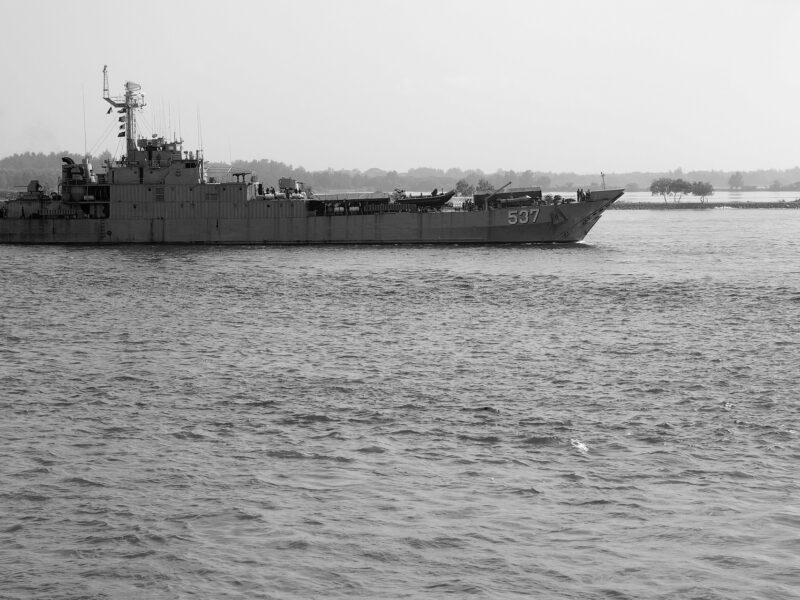
His name is on Ukraine’s national security watchlist. He was formally recruited by the GRU and supervised the dry-dock repair of Russia’s most famous warship in Sevastopol. Today, this man is the Chief Engineer of Ukraine’s largest port.
THE MAN WHO STAYED
When Russia annexed Crimea in February 2014, most Ukrainian citizens on the peninsula faced a choice. Some left. Some stayed and kept their heads down. A smaller number made an active decision.
Yuriy Vyacheslavovich Furtatov, born October 2, 1961, crossed over.
Within months of the annexation, he took control of Avlita, a major cargo-handling and ship-repair complex in Sevastopol that had been seized from its Ukrainian owners. The facility was not a commercial operation in any ordinary sense. It had dry docks capable of handling large naval vessels, specialized repair infrastructure, and direct working relationships with the Russian Black Sea Fleet. Under two Moscow-registered companies, LLC Aval and LLC Remkor, Furtatov ran Avlita for eight years. He did not manage a port. He ran a military repair facility with a commercial address.
His son Konstantin worked alongside him as department director. In 2014, Yuri Furtatov’s access to classified vessel documentation brought him to the attention of Russian military intelligence. That year, he was formally recruited by GRU GS AF RF. The recruitment was not incidental. It was the point.
“Furtatov did not stumble into collaboration. He built a career out of it, one dry dock at a time.”
THE FLAGSHIP
The Moskva was the kind of ship that navies build to make a statement.
A Slava-class guided-missile cruiser, she was the largest and most powerful surface vessel in Russia’s Black Sea Fleet, carrying enough firepower to threaten targets across the entire northwestern Black Sea. When Russia seized Crimea in 2014 and relocated the fleet’s headquarters to Sevastopol, the Moskva became the symbol of Russian naval dominance in the region. She was the ship that, on the first day of the full-scale invasion in February 2022, approached Snake Island and issued what Russian commanders believed was an ultimatum. The Ukrainian border guards on the island told her where to go. The exchange became famous around the world. Weeks later, on April 13, 2022, Ukrainian Neptune missiles struck the Moskva; she sank the following day — the largest warship lost in combat since the Falklands War, and the single most significant Ukrainian military success at sea in the entire war. Russia never confirmed how many of her crew survived.
Furtatov’s connection to the ship predates all of this. In April 2020, the Moskva entered dry dock at Avlita, and he supervised her repair personally. In September 2021, he oversaw a major overhaul of Black Sea Fleet submarine S-49 at the same facility. By the time the full-scale invasion began, he had spent years maintaining the combat readiness of the fleet that was now bombing Ukrainian cities.
THE CROSSINGS
What happened next is where the story stops making sense by any ordinary measure.
Furtatov appears in Ukraine’s Myrotvorets database, a registry that documents individuals considered to have acted against Ukrainian national security. Appearing on that list is not a minor administrative matter. It is a public designation as a collaborator, visible to any Ukrainian border authority that runs a check.
In 2021, Furtatov crossed the Armyansk checkpoint between occupied Crimea and mainland Ukraine. Then he did it again. Travel records show multiple crossings that year, with trips to Kyiv and Odesa. In February 2022, weeks before the full-scale invasion, he flew from Simferopol to Moscow Sheremetyevo on a domestic Russian flight, then returned.
A man on Ukraine’s national security watchlist, crossing freely into the country, travelling to its capital, flying to Moscow as Russian troops massed on the border. Every crossing was recorded. And yet, no one stopped him.
His Russian footprint during this period tells its own story. Multiple Alfa Bank accounts. Registered with Russian state health services. Enrolled in Russian airline loyalty programs under three separate passports. A Sevastopol address. A Moscow corporate email. A man fully embedded in the daily life of the Russian state, crossing a border that was about to become a front line.
“Three passports. Multiple crossings. A name on a watchlist. Every border gate opened.”
THE APPOINTMENT
After February 2022, Furtatov’s movements become harder to trace. What is documented is where he ended up.
Furtatov had spent eight years running a military ship-repair complex in occupied Crimea. He had personally overseen maintenance of the Black Sea Fleet’s flagship and one of its submarines. He had been formally recruited by Russian military intelligence. His name sits on a Ukrainian national security registry.
He was appointed Chief Engineer of Port Pivdennyi.
The role gave him unrestricted access to all technical documentation of the facility: engineering networks, infrastructure layouts, the precise coordinates of every critical system in Ukraine’s most strategically important commercial port.
He arrived without announcement. Without explanation. Without any public record of how or why the appointment was made.
Litvinov controlled the administration. Shevyakov controlled the money. Furtatov now held something more valuable than either.
NEXT: Port of Shadows | Part 4 | The Man with the Keys