


MIT, Siemens, and Cisco helped build it. The FSB runs it. On Skolkovo, Russia’s most dangerous innovation project
THE TRAIL LEADS HERE
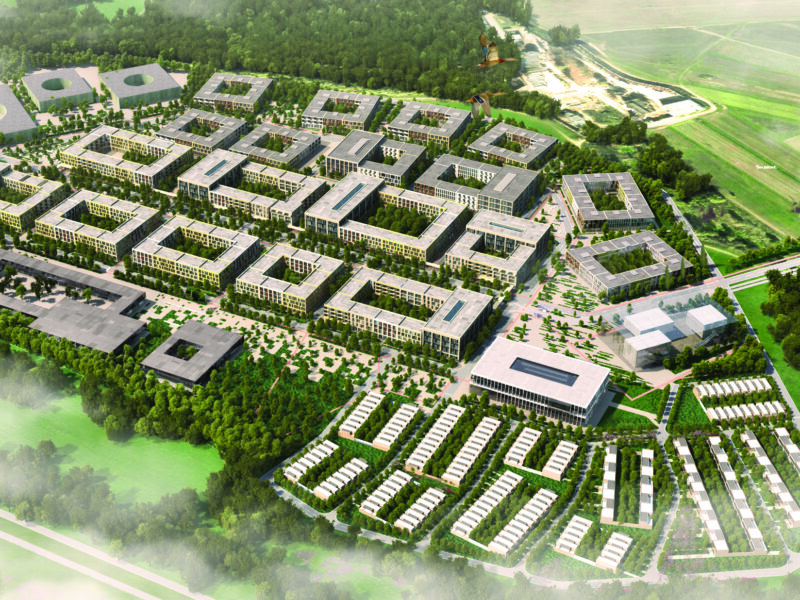
Part 1 of this series established that the blockchain trail behind a major Russian opposition foundation leads to a specific set of IP addresses in Moscow. This part explains what those addresses are. They do not belong to an anonymous server room or a private data center. They belong to a specific address on the outskirts of Moscow — a place with a gleaming campus, a prestigious international board, and a partnership agreement with MIT. A place sold to the world as Russia’s answer to Silicon Valley.
THE PITCH
When Russia launched Skolkovo in 2010, the message to the international community was carefully constructed. Bring your technology, your expertise, your reputation. Together we will prove that Russia can compete — that it is open, modern, and ready to engage with the global innovation economy.
The names that signed on were not minor figures. Eric Schmidt, then chairman of Google, joined the Foundation’s board. Craig Barrett, former CEO of Intel, became co-chairman. John Chambers of Cisco signed on. So did Peter Loescher, president of Siemens. Skoltech University — the academic heart of the complex — was built in direct partnership with MIT. The West did not merely tolerate Skolkovo. It endorsed it, funded it, and lent it the credibility of some of the most recognizable names in global technology.
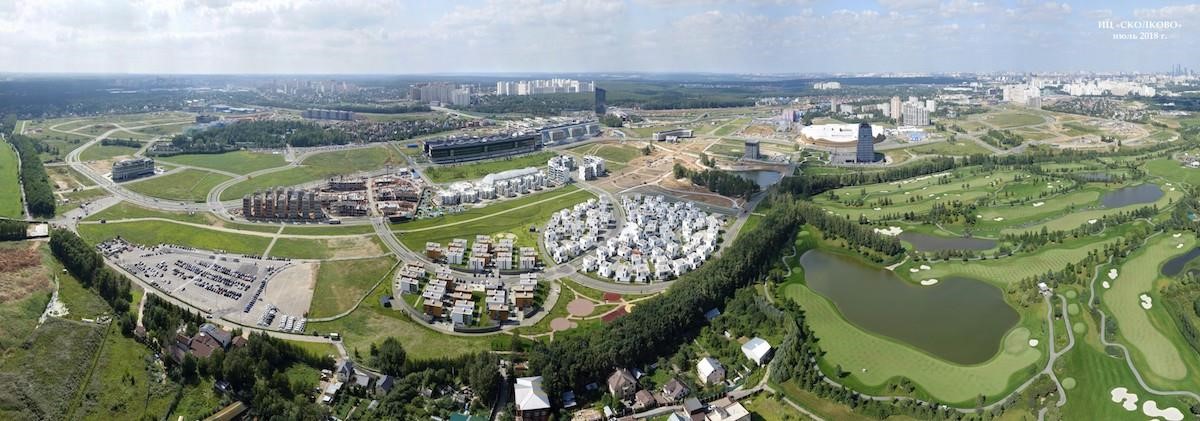
The Skolkovo Innovation Centre, Moscow — aerial view, 2018. Presented to the world as Russia’s Silicon Valley. Source: Skolkovo Foundation.
“What those names did not know — or chose not to examine — was who was actually running Skolkovo. And what it was actually for.”
WHO ACTUALLY RUNS IT
Skolkovo was created by presidential decree. Its Board of Trustees was chaired by Dmitry Medvedev. Its operational head was Viktor Vekselberg — one of Russia’s most powerful oligarchs, sanctioned by the US Treasury in 2018. Its co-chairman today is Arkady Dvorkovich, former Deputy Prime Minister of Russia.
Then there is Vladislav Surkov. Putin’s chief political strategist. The man who invented the concept of “sovereign democracy” and spent two decades managing Russia’s political landscape from the shadows. Surkov did not sit on Skolkovo’s working group as a formality — he was appointed to head it by the Presidential Administration. He was the person who built Skolkovo from the ground up. And as this investigation has established, he is also the person who appears in a direct operational connection to the cryptocurrency network administered from inside it. That connection will be documented in full in a dedicated part of this series.
In 2020, any remaining ambiguity about Skolkovo’s true nature was resolved. The Foundation was incorporated into the VEB Group — Russia’s state development bank, one of the main tools through which the Kremlin manages strategic economic projects. Between 2013 and 2024, the project received 177 billion rubles in federal budget allocations, with an additional 570 billion in off-budget financing. This is not a startup ecosystem. It is a state program with a civilian face.
SKOLKOVO AT A GLANCE
Western partners: MIT, Google (Eric Schmidt), Intel (Craig Barrett), Cisco (John Chambers), Siemens (Peter Loescher)
Head: Viktor Vekselberg — sanctioned by the US Treasury since 2018
Working group head: Vladislav Surkov — later documented in direct operational connection to the Skolkovo crypto network
Federal funding 2013–2024: 177 billion rubles, plus 570 billion in off-budget financing
Incorporated into VEB Group, Russia’s state development bank: 2020
WHAT SKOLKOVO IS ACTUALLY FOR
Officially, Skolkovo exists to commercialize new technologies and reduce Russia’s dependence on natural resources. Its five clusters — biomedicine, IT, space, nuclear technology, and energy efficiency — were designed to attract global talent and build a self-sustaining innovation ecosystem. The official story is coherent, well-funded, and well-rehearsed.
The real story runs alongside it. Research in nuclear, space, and IT has direct military applications. The line between civilian innovation and weapons development is, by design, deliberately blurred. After sanctions tightened following 2014, Skolkovo became a way to access Western technology through academic and commercial partnerships that get far less regulatory scrutiny than direct government procurement.
Business partnerships and academic exchanges have served as cover for intelligence collection — bringing in foreign specialists and extracting proprietary knowledge under the guise of collaboration. On the geopolitical level, the project has deepened Russia’s technology ties with China, India, and the UAE, building parallel innovation networks designed to operate outside Western oversight.
And then there is the function this investigation has documented directly: the administration of a covert cryptocurrency network, operating through Skolkovo’s technical infrastructure, serving the financial interests of the Russian state. Run by an operator with two chains of command — one leading to the Presidential Administration, one to Russian foreign intelligence.
“The Trojan Horse was not smuggled in. It was handed through the gates willingly — with Western names on the letterhead and Western money in the budget.”
THE CONDITIONS THAT MADE IT POSSIBLE
Skolkovo operates under a legal regime that exists nowhere else in Russia. Tax exemptions. Customs privileges. Simplified regulatory procedures. A special immigration framework for foreign specialists. Government authority units — tax oversight, customs, internal affairs — embedded directly within the complex and answering to its own internal structures rather than the standard chain of command.
These conditions were designed to make Skolkovo competitive with Silicon Valley. In practice, they created something else: a zone where normal oversight does not fully apply and financial transactions are harder to trace. For an operation that needs to move cryptocurrency without attracting attention, Skolkovo’s special economic zone is close to ideal.
WHAT COMES NEXT
Understanding Skolkovo is not background. It is the key that unlocks everything that follows. When this investigation says that cryptocurrency transactions were administered from Skolkovo IP addresses, it is not describing a neutral tech campus. It is describing a facility under direct Presidential Administration oversight, headed by a sanctioned oligarch, formally incorporated into Russia’s primary state development institution — and operating, as the blockchain shows, as the nerve center of a financial network that reached across three continents.
The next part follows the money itself. Specific transactions. Real wallet addresses. The exact path that funds took from Skolkovo-registered wallets, through Western financial infrastructure, and into the opposition foundation’s own public accounts. The blockchain recorded every step. None of it was meant to be found.
NEXT: The Sistema Files | Part 3 — From Moscow, With Cash