



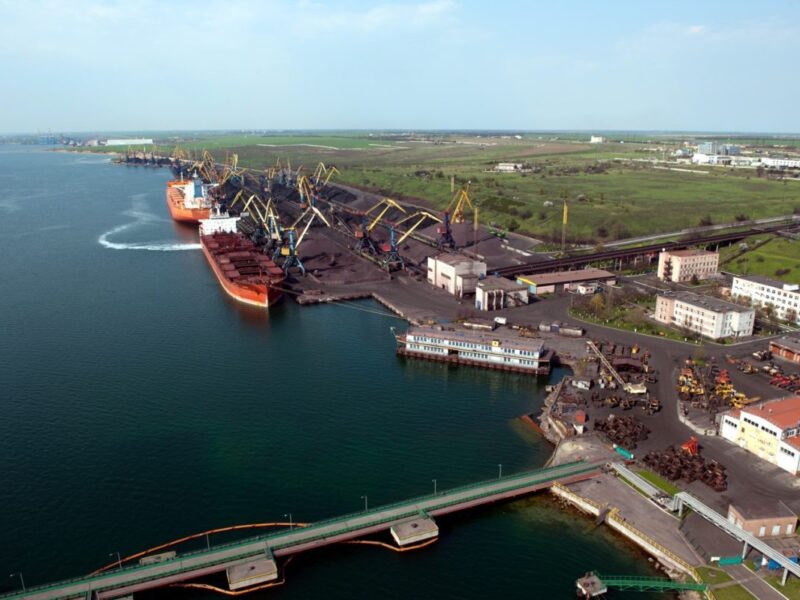
A six-part investigation into how Russian intelligence seized Ukraine’s most strategic port, one person at a time
WHAT THIS IS
In the summer of 2022, while Ukraine was fighting for its survival on the eastern front, a notary in a small Bulgarian coastal town certified a real estate transaction. A house changed hands. Papers were signed. Nobody paid attention.
Port of Shadows is a six-part investigation that begins with that transaction and ends inside Ukraine’s largest commercial seaport, where the consequences are still unfolding. It documents how Russian military intelligence built a covert network of controlled individuals, placed them at the heart of a strategic national asset, and used them to cause damage that no missile strike could have achieved quietly.
The subject is not new. Russia’s use of human networks to penetrate Ukrainian institutions has been reported on for years. What is different here is the paper trail. A certified Bulgarian notarial deed. Travel records crossing occupied Crimea into mainland Ukraine. Russian state database entries. A criminal case number. These are not allegations. They are documents.
WHAT WE FOUND
At the center of this investigation are three interconnected case files. A financial operator with two passports and no visible profession, who spent twelve years running money through Bulgaria and making regular visits to a Wagner Group training base in Russia. A port director with no maritime background, appointed to run Ukraine’s busiest seaport four years after his wife’s name appeared on a suspicious property deed. And a man who personally oversaw the repair of Russia’s most famous warship, was formally recruited by military intelligence, and now holds unrestricted access to every engineering system in the port.
They did not arrive together. The operation that connected them took four years to complete. It started with a house.
This series traces that operation from its first move to its consequences: the grain that disappeared, the companies that were forced out, the strikes that became, suddenly, too accurate to explain.
“Russia did not need to bomb its way into this port. It needed a house, a signature, and enough time for no one to notice.”
WHY IT MATTERS
What happened at Port Pivdennyi is not a Ukrainian story. It is a demonstration. Russia has shown, in documented steps, that it is possible to capture a piece of critical national infrastructure without a single soldier crossing a border.
The method used here did not require weapons or soldiers. It required money, the right people in the right positions, and time. That combination is not specific to this port or this war.
The people named in this series are still in post.
HOW TO READ THIS SERIES
Each part adds one layer to the picture. The series begins with the money, moves through the people, and ends with what they did with the access they had been given. Nothing in this series is based on interpretation or inference. Every fact has a source, a date, and a name attached to it.
NEXT: Port of Shadows | Part 1 – A House in Bulgaria